
Delve into the significance of resolutions, their origins, and actionable advice for making meaningful life improvements this year.
For many people, owning rental property is a key part of their investment strategy and retirement planning. It provides income and potential appreciation, but it also comes with significant risks.
This originally aired on the Catholic Faith Network’s show CFN Live: https://youtu.be/0ytLEejNBj4
Why is owning rental property in your own personal name considered risky?
When you own a property in your own name, you are personally liable for anything that happens on that property.
If a tenant slips and falls, or if a major accident occurs on the property, you could be facing a lawsuit that threatens not just that specific property, but your personal assets as well.
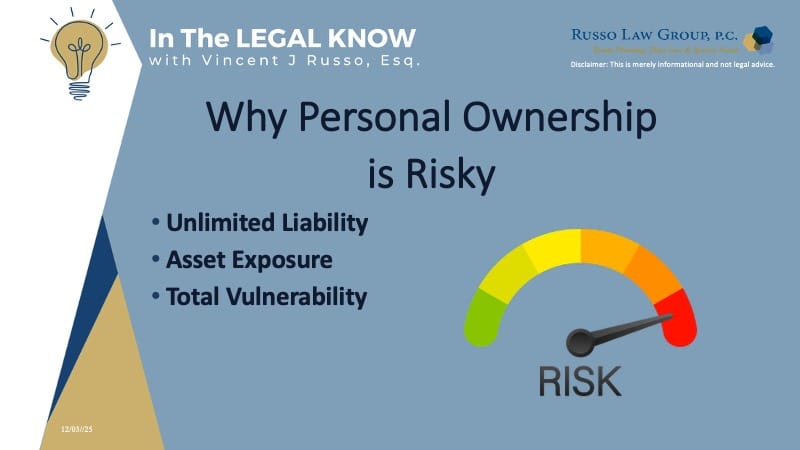
If there is a judgment against you that exceeds your insurance coverage, a creditor can come after your personal bank accounts, your home, and your other investments. Your entire financial life is exposed because of that one rental property.
What is the most common strategy you recommend limiting that liability?
The most effective tool we recommend in our law practice is the Limited Liability Company, or LLC. An LLC is a legal entity like a corporation.
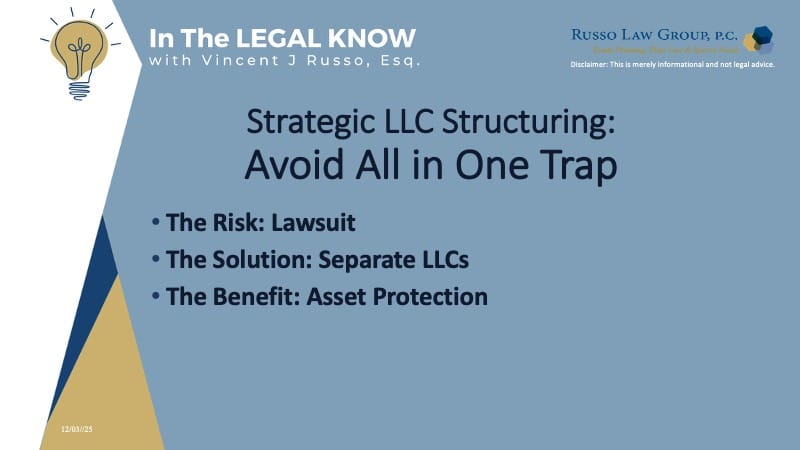
Holding rental property in an LLC can create a legal barrier. If a lawsuit arises concerning the property, the plaintiff is suing the LLC, and you are not personally liable. This means your personal assets—like your family home or your savings—are shielded from the lawsuit.
Since your ownership of the property is evidenced by a deed, a new deed would be required to transfer the property to the LLC.
If you have multiple properties. You need to decide on whether you will place all the properties in one LLC or have separate LLCs for each property.
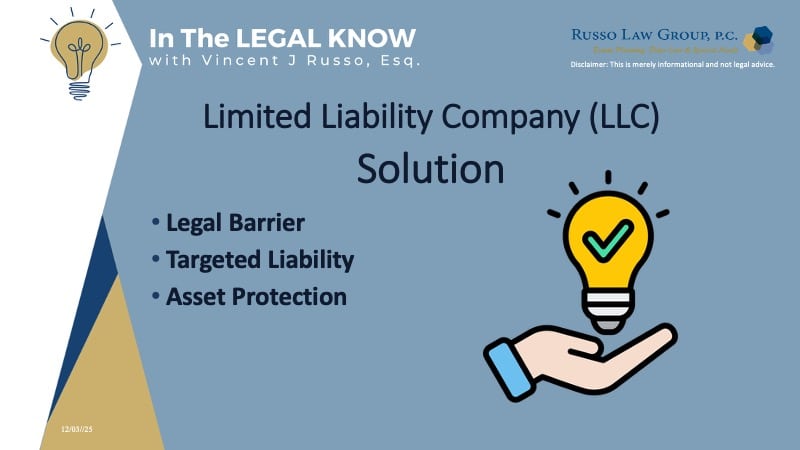
For example, if you put three properties into one LLC and there is a lawsuit involving “Property A,” all the assets inside that LLC are at risk. That means “Properties B and C” could potentially be seized to satisfy a judgment. The better strategy is often to create separate LLCs for each property. We call this compartmentalization. It ensures that a problem with one property does not sink the whole ship.
Does forming an LLC replace the need for good insurance?
Not at all. They work together. You absolutely need a robust landlord insurance policy to cover the costs of defense and potential damages. The LLC acts as a safety net for when the claim exceeds the policy limits. Think of insurance as your first line of defense and the LLC as the fortress protecting everything else you own.
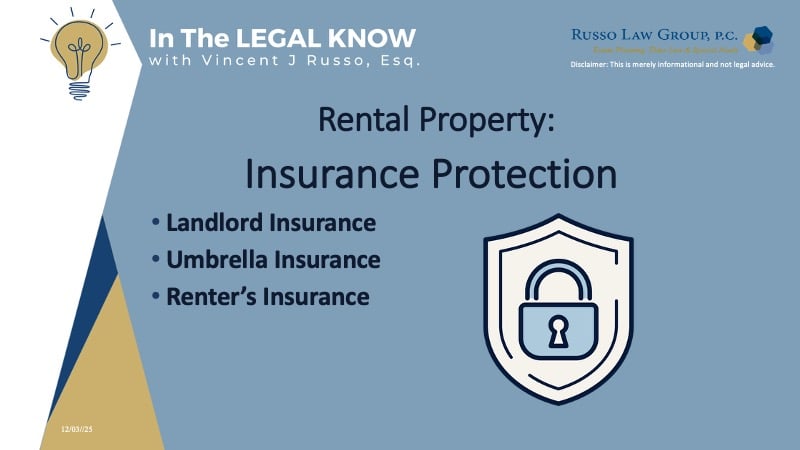
There are three types of insurance coverage to consider.
- Landlord Insurance: This essential policy provides financial protection against property damage and liabilities specific to rental properties.
- Umbrella Insurance: An umbrella policy provides an extra layer of liability coverage beyond your standard landlord insurance, offering broader protection and peace of mind should an unforeseen situation or large claim arise.
- Renters Insurance: Renters insurance benefits landlords by protecting the property from tenant negligence, reducing liability, and lowering the risk of claims on their own insurance policies. When a tenant’s actions, like a fire or water damage, damage the building, the tenant’s renters insurance can cover the repair costs, potentially preventing the landlord’s premiums from increasing. It also covers liability if a tenant’s guest is injured and protects against disputes over the cost of repairing the tenant’s personal property.
Is it difficult to maintain an LLC once it is set up? Are there specific rules landlords need to follow?
It is not overly difficult, but you must respect the formalities.
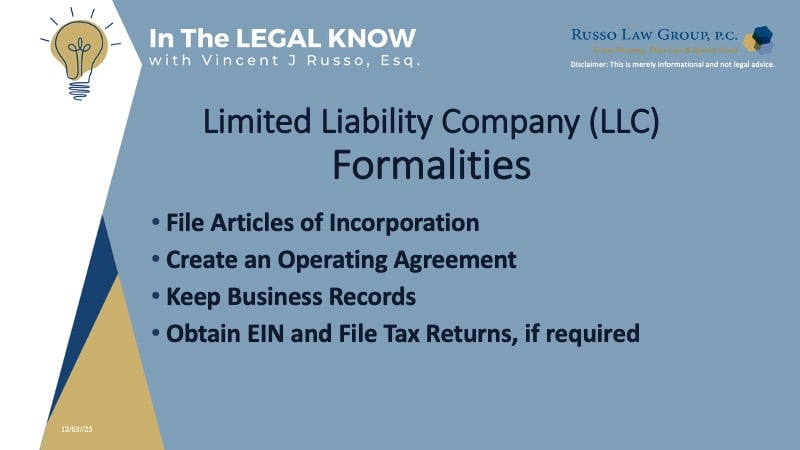
- File Articles of Organization: This is the primary document that officially creates the LLC with the state. It includes the LLC’s name, address, purpose, and management structure.
- Appoint a Registered Agent: You must designate a registered agent who will have a physical address in the state and can receive official and legal documents on behalf of the LLC.
- Create an Operating Agreement: This internal document is strongly recommended, even if not required by every state, and outlines the LLC’s management, how profits and losses are distributed, and the rules for members.
- Choose a Business Name: Select a unique name for your business and ensure it complies with your state’s naming rules, which often require “LLC” or “Limited Liability Company”.
- Obtain an EIN: Apply for an Employer Identification Number from the IRS, which you will need to open a business bank account and file taxes.
- Get Business Licenses and Permits: Research and obtain all necessary licenses and permits for your specific industry and location.
For tax purposes, LLCs are considered “pass-through entities,” which means the LLC itself does not pay federal income taxes on business income. Instead, income “passes through” to individual members of the LLC, who pay federal income tax earned from the LLC via their own individual tax returns.
Further, you cannot treat the LLC’s bank account as your personal ATM. You need to keep separate books and records, and sign documents as a member of the LLC, not as yourself individually. If you co-mingle funds or ignore the corporate structure, a court might “pierce the corporate veil,” which would nullify the protection you set up.
If you already have property in your own name, is it too late to make a change?
 Generally, it is not too late, if done in advance of any lawsuit against you.
After forming the LLC, you would then transfer the property by a deed from your name to the LLC. However, you must be careful about things like the “due on sale” clause in your mortgage, potential transfer taxes, or existing creditor claims.
It is important to review your specific situation with an attorney to ensure the transfer is managed smoothly without triggering unintended costs.
If you would like to speak with an experienced elder law attorney regarding your situation or have questions about something you have read, please do not hesitate to contact our office at 1 (800) 680-1717. We look forward to the opportunity to work with you.
Disclaimer: The information provided above is for general informational purposes only and is not legal advice.

Related Posts



Comments (0)