
Understand inherited IRAs and the 10-year rule under the SECURE Act. Learn how to manage your inherited retirement accounts.
Why is it so important for people to have a clear understanding of their assets when it comes to estate planning?
Estate Planning is all about ensuring that your wishes are carried out and your loved ones are taken care of. But if no one knows what you own or where to find your assets, it can create confusion. This can also cause delays and even disputes.
This originally aired on the Catholic Faith Network’s show CFN Live: https://youtu.be/FdWXgyGJubo
Now, the first step is to make a list of all your assets with details such as how the assets are owned, what they are worth and whether a beneficiary has been designated.
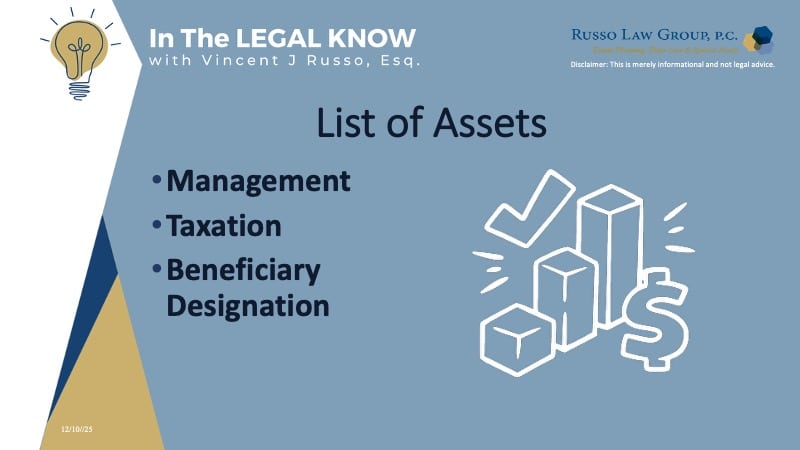
Having a list of your assets will help you properly manage them. It will also help you more easily evaluate the taxation of those assets. In addition, it helps identify who the beneficiaries are of those assets. Lastly, it allows you to more efficiently consider how these assets will be used in your retirement years.
Having a clear inventory of your assets is the foundation of a solid estate plan.” But your Fiduciary needs to know how to access the list.
How important is it to include passwords in your estate plan?

Passwords are absolutely critical. So much of what we own today is tied to online accounts—banking, investments, even social media. Without access to these accounts, your loved ones may not be able to manage or even locate your assets.
Best Practices
While the benefits of making a list are clear, it is crucial that this list is stored securely. Instead of a physical notebook or an unencrypted spreadsheet, consider using a reputable password manager program that encrypts your data. Such a program often allows for secure sharing with trusted contacts when needed.
It is important that you share the list or communicate how to access the list with you the person you trust to handle your financial matters. This trusted person may be a spouse. Or, it could be the executor under a Will, an agent under a Durable Power of Attorney or a trusted family member.
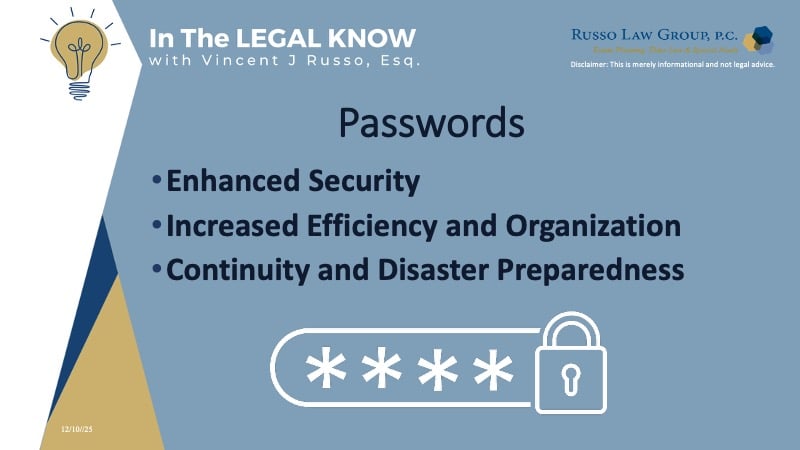
Enhanced Security
- Promotes Strong Password Practices: Documenting passwords necessitates the use of complex, unique passwords for each account, which is a cornerstone of strong security. It removes the mental burden of remembering many complex strings, so you can stop using weak, repeated passwords.
- Aids in Incident Recovery: In the event of a security breach, a comprehensive list allows for quick identification of all affected accounts and assets, enabling prompt action to change compromised passwords and secure systems.
- Simplifies Regular Audits: A list makes it easier to conduct regular security reviews of your digital footprint, checking for outdated accounts, weak passwords, and unnecessary data.
Increased Efficiency and Organization
- Streamlined Access: A consolidated list provides a single, efficient reference point for locating specific accounts, devices, or data when needed, eliminating time wasted searching for forgotten credentials.
- Reduces Lockouts: By having accurate credentials readily available, you minimize the frequency of being locked out of accounts, which can be time-consuming and frustrating to recover.
Continuity and Disaster Preparedness
- Facilitates Estate Planning and Inheritance: A securely managed list provides authorized individuals (such as a spouse, executor, or trusted family member) with necessary access during an emergency, incapacity, or after your passing. This ensures essential assets (like bank accounts, social media, and digital property) can be managed as per your wishes.
- Business Continuity: In a business setting, such a list is crucial for ensuring that operations can continue smoothly even if a key employee is absent, guaranteeing access to vital systems and data.
What should people know about including cryptocurrency in their estate plan?
Cryptocurrency is a unique challenge because it’s decentralized and often requires specific keys or codes to access. If those keys are lost, the cryptocurrency is essentially gone forever. It’s crucial to document not only the existence of your cryptocurrency but also how to access it. This might include wallet addresses, private keys, and instructions for navigating the platforms where the cryptocurrency is held. And again, this information needs to be stored securely and shared with a trusted person or advisor.”
What happens if an individual becomes incapacitated and there is no list of assets?
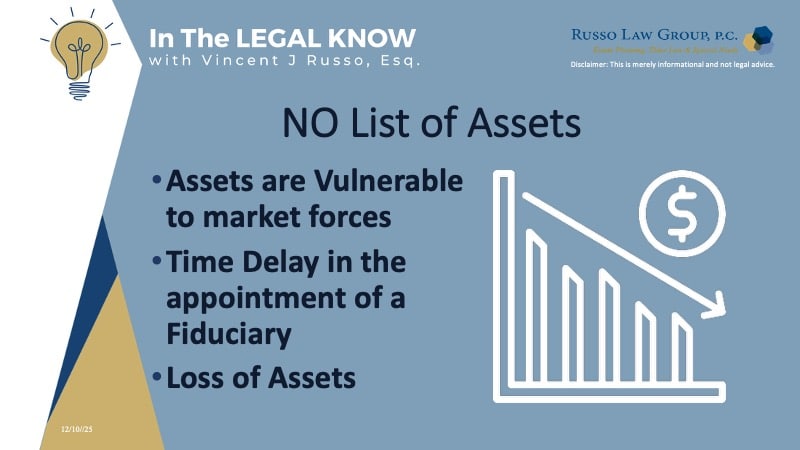
Until assets can be identified and managed, they are vulnerable to market forces which can result in a significant loss. There may be a delay in the appointment of a Fiduciary. If the asset remains unknown or there is no way of accessing the asset, then it may be lost.
What happens to someone’s assets when they pass away, especially if they haven’t done any estate planning?
If someone passes away without a plan but has a Last Will and Testament, then their assets go through a process called probate. This is a court-supervised process where the deceased’s assets are identified. The debts are paid, and the remaining assets are distributed according to state law.
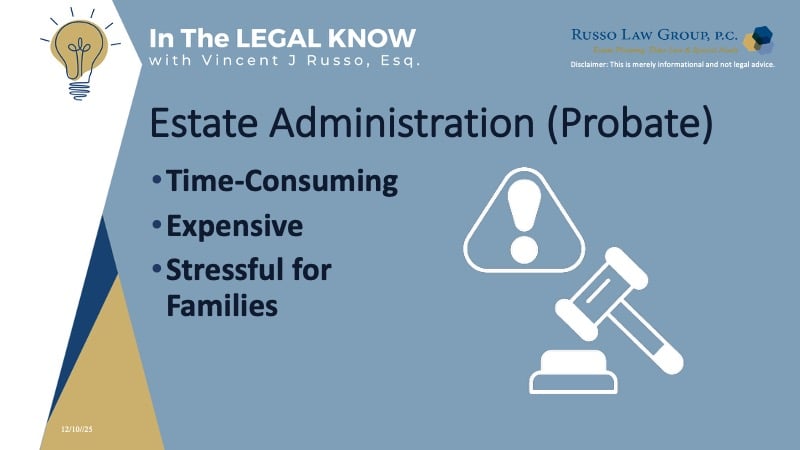
Probate can be time-consuming, expensive, and stressful for families. That’s why having a clear estate plan, including a will or trust, is so important—it helps avoid many of these issues and ensures your wishes are followed.
If there is no Will, then the assets owned solely in your name with no named beneficiary pass through an estate administration and NYS decides who should inherit your assets.
Without a list of assets, the Executor of the estate will be delayed in accessing those assets for loved one. This can be a frustrating and time-consuming process. This will add to the cost of the estate administration.
Tips for families who are dealing with the loss of a loved one or a loved one who is incapacitated!
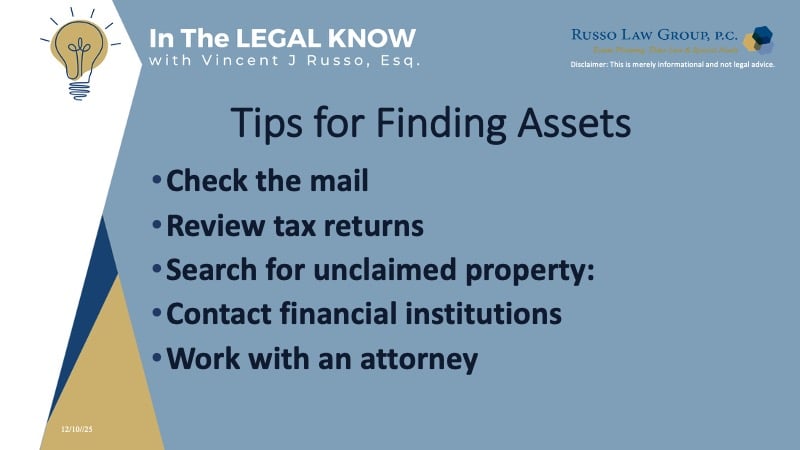
- Check the mail: Look for bank statements, bills, or other financial documents that might indicate accounts or assets.
- Review tax returns: Tax returns often list income from investments, retirement accounts, or other sources.
- Search for unclaimed property: Many states have online databases where you can search for unclaimed assets.
- Contact financial institutions: If you know where your loved one banked or invested, reach out to those institutions.
- Work with an attorney: An experienced estate planning attorney can help you navigate the process and uncover assets you might not have considered.”
What’s the best way to take that first estate planning step?
The best way is to sit down with an experienced attorney who can guide you through the process. At the Russo Law Group, we help families create comprehensive estate plans. These plans include everything from asset inventories to trusts and more.
Estate planning can feel overwhelming, but it’s clear that taking the time to organize your assets—and making sure someone knows how to access them—can make a world of difference for your loved ones.
If you would like to speak with an experienced elder law attorney regarding your situation or have questions about something you have read, please do not hesitate to contact our office at 1 (800) 680-1717. We look forward to the opportunity to work with you.
Disclaimer: The information provided above is for general informational purposes only and is not legal advice.

Related Posts


Comments (0)