
Find out how an ABLE account can enhance financial security and provide essential support for those with disabilities.
Whether you recently received one or are planning for the future, understanding how to keep and manage your inheritance is crucial.
America stands at the edge of the most dramatic shift in personal finance ever measured—a generational transfer of nearly $124 trillion in assets over the next 22 years. A combination of demographic and economic forces will see a record amount of wealth move from baby boomers and older Americans to heirs, widows, and charities. By 2048, this unprecedented transfer will have taken place.
This originally aired on the Catholic Faith Network’s show CFN Live: https://youtu.be/3FGCgxWWoOA
What is an inheritance and who is entitled to one?
An inheritance refers to the actual property or assets that one receives upon the death of an individual.
The inheritance may be either under the terms of a Will or by intestacy laws if the deceased had no will. However, the Will must comply with the laws of the jurisdiction at the time it was created. Otherwise, it will be declared invalid.
Are children entitled to an inheritance?
Children are not entitled to an inheritance if the parent has a Will designating beneficiaries of their estate. If there is no Will and no surviving spouse, they are entitled to an inheritance under the state’s intestacy laws.
What are the first steps someone should take to protect their inheritance?

The first step is to take a moment to process the situation. Receiving an inheritance often comes during an emotional time, so it is important not to rush into decisions. Start by gathering all the necessary documents, such as the will, trust, or any other estate planning documents. Identify the executor or trustee who is responsible for managing the estate and establish open communication with them.
It is also critical to understand the timeline. Estate settlement can take months or even years, depending on the complexity of the assets and whether the estate goes through probate. During this time, avoid making any major financial decisions. Wait until you have a clear picture of what you are inheriting and any associated responsibilities.
For example, I have seen cases where beneficiaries immediately sold inherited property without understanding the tax implications. As a result, they faced unexpected capital gains taxes. In another instance, someone withdrew funds from an inherited retirement account without consulting a financial advisor, triggering significant income taxes. Therefore, taking the time to consult with professionals can help you avoid costly mistakes like these.
What legal rights do beneficiaries have during the estate settlement process?
Beneficiaries have several key rights:
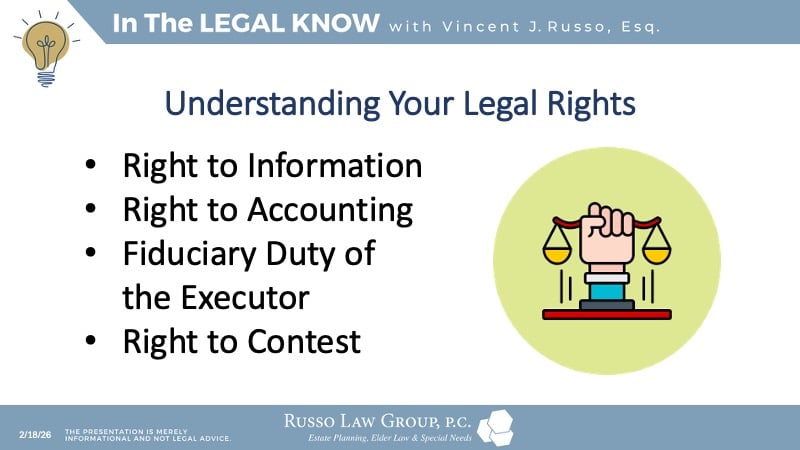
First, you have the right to receive a copy of the Will or trust and to be notified when probate begins. Transparency is critical, and you can request an accounting of the estate, which details the assets, income, expenses, and debts. Executors and Trustees have a fiduciary duty to act in your best interest. They must also treat all beneficiaries fairly.
If you suspect fraud, undue influence, or mismanagement, you have the right to contest the will or petition to remove the executor. For example, if an Executor is not providing timely updates or is making questionable financial decisions, you can take legal action to protect your inheritance.
Contesting a will is not uncommon, especially in cases where family dynamics are complicated. However, it is important to know that contesting a Will can be a lengthy and expensive process. Courts typically require compelling evidence of fraud, undue influence, or improper execution of the will. In many cases, disputes are resolved through mediation rather than going to trial, which can save time and money.
What are the tax implications of receiving an inheritance?
Inheritances are generally not considered taxable income at the federal level, but there are exceptions.
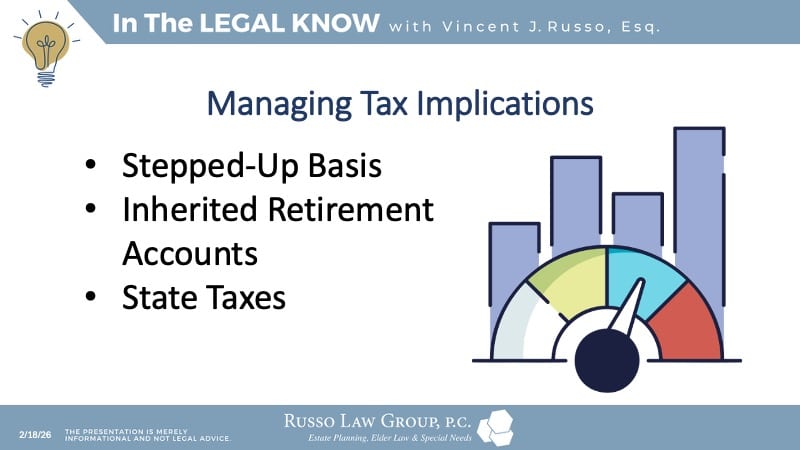
Step Up in Basis: Step up in basis is a tax provision that allows an heir to inherit assets with its fair market value at the time of the time of the original owner’s death. Rather than the asset’s original purchase price, this new value is used.
For example, if you inherit stocks or real estate, the stepped-up basis rule applies. This means the cost basis of the asset is adjusted to its fair market value at the time of the decedent’s death, which can minimize capital gains taxes if you sell the asset later.
Retirement Accounts: Retirement accounts like IRAs or 401(k)s are more complex. Most non-spouse beneficiaries must withdraw the funds within 10 years. Additionally, these distributions are taxed as ordinary income.
State Taxes: Additionally, seventeen states impose either an estate tax or an inheritance tax, so it is important to check if your state is one of them. Consulting a tax professional can help you navigate these rules.
What are some strategies to minimize taxes on inherited assets?
If you inherit a retirement account, you can work with a financial advisor to create a withdrawal plan that minimizes your tax burden. For example, spreading withdrawals over several years can help you avoid being pushed into a higher tax bracket.
For other assets, like real estate, holding onto the property for a period of time before selling can sometimes be advantageous, depending on market conditions and tax laws.
What happens if the estate has debts or liabilities?
Debts and liabilities can significantly impact the inheritance process.

Generally, the estate is responsible for paying off the deceased’s debts, such as credit card balances, medical bills, or loans, before any assets are distributed to beneficiaries.
If you inherit property with a mortgage or a car with an outstanding loan, you may need to continue making those payments if you choose to keep the asset. However, you also have the right to refuse an inheritance. For example, if an asset carries more debt than value or is a logistical nightmare, you can formally disclaim it. This decision must be made carefully and often requires legal guidance.
If the estate does not have enough assets to cover its debts, it is considered insolvent. In this case, creditors are paid in a specific order of priority, and beneficiaries may not receive anything. However, it’s important to note that beneficiaries are generally not personally responsible for the deceased’s debts unless they co-signed a loan or are otherwise legally obligated.
What are some financial steps for someone who has just received an inheritance?
There are several steps to consider:

First, I recommend taking a ‘Decision Sabbatical.’ Avoid making major life changes, like quitting your job or buying a luxury car, for at least six months to a year. This gives you time to process the financial shift. It also allows you to make thoughtful decisions.
Next, prioritize paying off high-interest debt, such as credit cards, with any liquid inheritance you receive. Once your debts are under control, consider working with a financial advisor to create an investment strategy. The investment strategy should align with your long-term goals.
Finally, update your own estate plan. A significant inheritance can change your net worth, so it’s important to review your will, beneficiary designations, and insurance needs.
Here is an opportunity to invest in your future – retirement, college savings and home improvements (while putting some funds aside for vacations and travel).
If you would like to speak with an experienced elder law attorney regarding your situation or have questions about something you have read, please do not hesitate to contact our office at 1 (800) 680-1717. We look forward to the opportunity to work with you.
Disclaimer: The information provided above is for general informational purposes only and is not legal advice.

Related Posts



Comments (0)