
Find out how an ABLE account can enhance financial security and provide essential support for those with disabilities.
What do I need to know if I am filing my tax return on April 15th?
Today is a date circled on almost everyone’s calendar: April 15th. It is officially Tax Day.
This originally aired on the Catholic Faith Network’s show CFN Live: YouTube Link Coming Soon!
The most important thing to know is that today is the hard deadline for most taxpayers to either file their return or file for an extension.
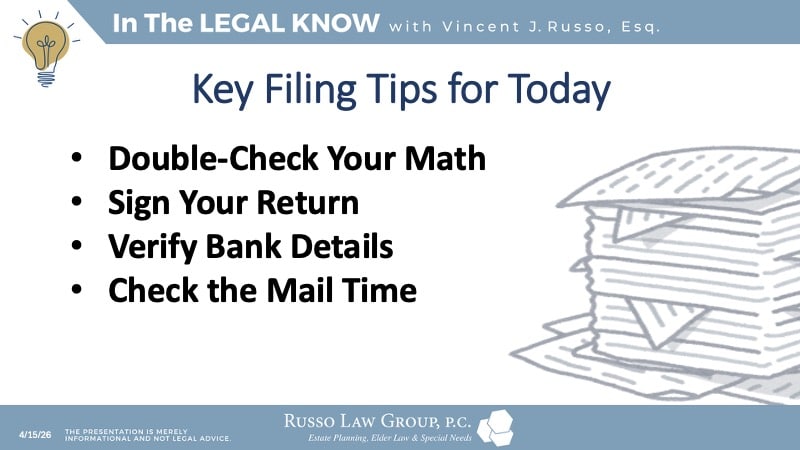
 If you are filing today, double-check your math, ensure you have signed the return, and make sure you’re routing and account numbers are correct if you want a direct deposit refund.
Rushing often leads to simple errors, and those errors can delay your processing by weeks or even months.
I always remind clients to scan or copy their entire return for their records before sending it in — especially if this is the first year, that they are filing on their own.
E-filing is generally considered safe and is the preferred method by the IRS because it’s processed faster and comes with auto-confirmation.
What do I need to do if I need an extension of time to file my return?
You can easily request an automatic six-month extension, which gives you until October 15th to file your actual return.
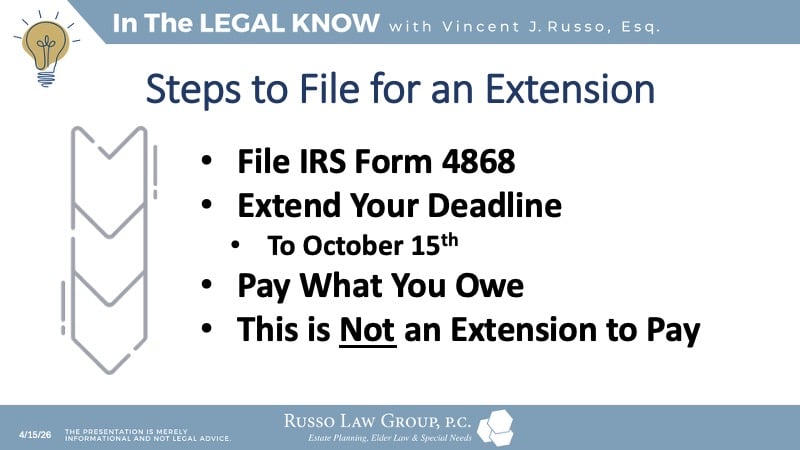
To do this, you need to file Form 4868 with the IRS. You can submit this form electronically through the IRS Free File system, through your tax software, or you can mail a paper copy. Just remember, the extension request must be submitted or postmarked by today, April 15th.
Many people think an extension gives them extra time to pay, but that’s not the case. If you owe taxes, those are still due today, regardless of whether you file for an extension. And an extension is automatic—no explanation is needed—so you won’t be penalized just for filing one.
Do I have to make any tax payments when filing for an extension?
Yes, and this is a crucial point.
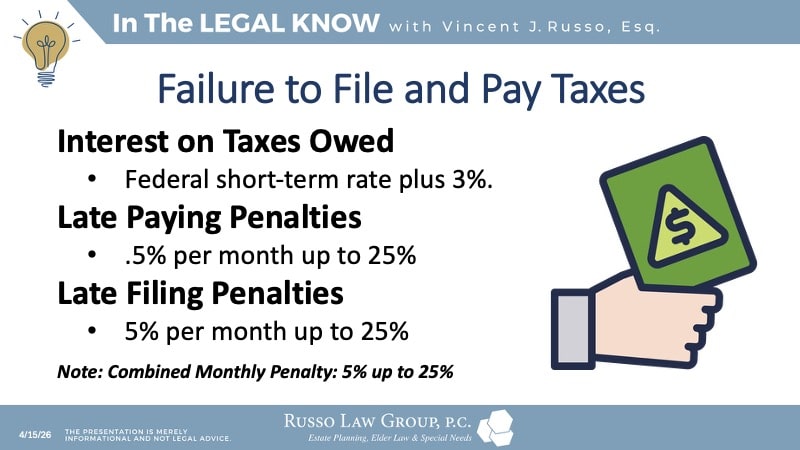
An extension of time to file is not an extension of time to pay. If you expect to owe taxes, you must estimate your tax liability and pay that amount when you file your extension today. If you do not pay what you owe by the April 15th deadline, you will face failure-to-pay penalties and interest on the unpaid balance. You should look at your previous year’s taxes and your current income to make the most accurate estimate possible.
The IRS is charging interest at 6% per annum and NYS is charging interest at 8.5% per annum in April 2026. Please note that the rates do fluctuate.
Late tax penalties include failure-to-pay penalty (0.5% of unpaid tax per month, capped at 25%) and a failure-to-file penalty (usually 5% of unpaid tax per month, capped at 25%). If both apply, the 5% failure-to-file penalty is reduced by the failure-to-pay penalty. Hence the maximum monthly penalty is 5% up to 25%, plus interest.
If your return is over 60 days late, there is also a minimum penalty for late filing; it is the lesser of $525 (for 2025 tax returns required to be filed in 2026) or 100 percent of the tax owed.
If you overpay, the IRS will refund you after you file your return. So, you have to at least pay what you think you owe today, even if the paperwork comes later.
Is putting the return in a mailbox sufficient for filing a tax return?
It is, as long as you follow the rules.
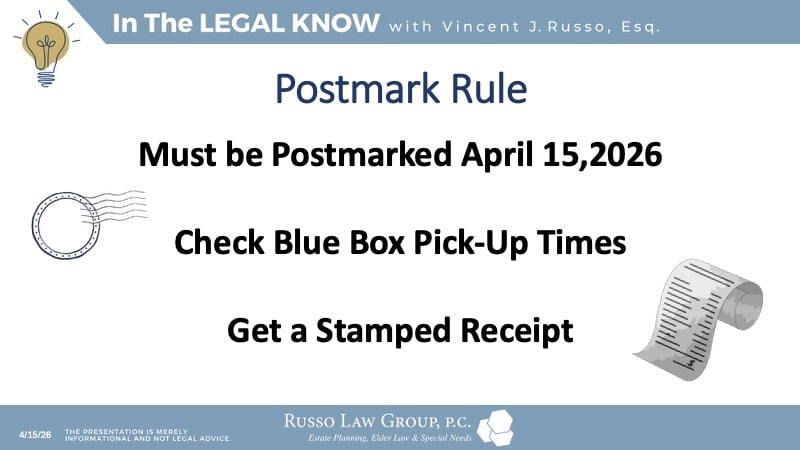
The IRS uses the postmark date to determine if a return is filed on time. If you drop it in a blue USPS mailbox today, you must ensure it gets picked up and postmarked by the post office today, April 15th. If you drop it in a box at 8:00 PM after the last collection time, it will be postmarked on April 16th, making it late.
I always recommend taking it directly into the post office and asking for a stamped receipt or sending it via certified mail so you have proof of the mailing date. I recall a client missing a timely filing because the return was postmarked a day late—always check collection times!
What are some of the most common mistakes when rushing to meet the deadline?
Unfortunately, there are a number of common mistakes that can cost you dearly when filing your tax return.
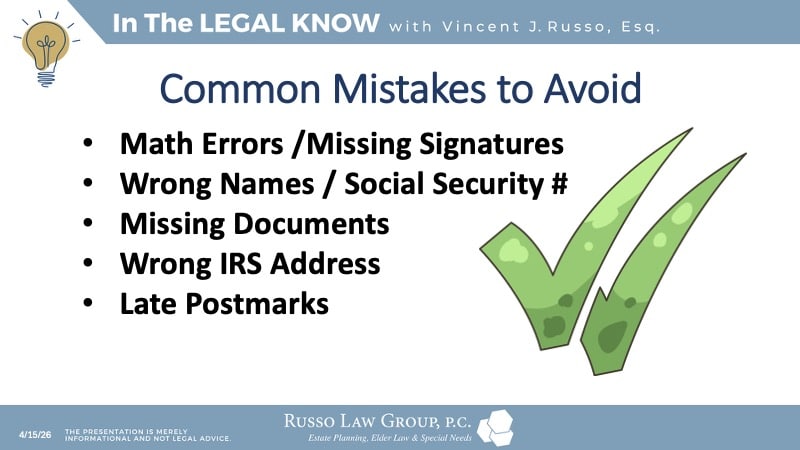
Beyond the simple math errors and missing signatures, we talked about, people often forget to include necessary forms, like W-2s, or they use the wrong mailing address. The IRS has different processing centers depending on where you live and whether you are including a payment. Sending it to the wrong center delays everything. Also, spelling names incorrectly or messing up Social Security numbers for dependents are surprisingly common errors.
What if I owe the IRS but can’t afford to pay right now?
If paying your tax bill in full is not possible, it is crucial to still file the return or at least the extension. After that, you can work out a payment plan with the IRS, known as an installment agreement. You can apply for this online, and it allows you to stretch payments over time, minimizing penalties.
The worst thing to do is ignore the bill. Communication with the IRS goes a long way, and options exist to reduce or manage penalties.
What about state taxes?
Each state can set its own deadline—most align with the federal schedule, but not all. Some states require a separate extension request or additional forms. Be sure to check your state revenue agency’s website so you don’t accidentally miss out on crucial deadlines or credits.
What if I have never filed before, where do I start?
First, you’re not alone. Many people file for the first time as young adults or after major life changes.
My advice is to stay organized—gather all income forms, previous returns, and identification. Use free IRS tools or trusted tax software for guidance, and don’t hesitate to reach out for personal help.
Remember, the goal is not to achieve perfection, but to complete the return accurately and on time.
What happens if I completely miss the deadline today?
If you miss the deadline and you owe money, you will face two different penalties. The first is a failure-to-file penalty, which is usually 5% of the unpaid taxes for each month your return is late.
The second is the failure-to-pay penalty, which is 0.5% of the unpaid taxes for each month. As you can see, the penalty for failing to file is much steeper. That is why I always tell people to file an extension even if they cannot afford to pay their tax bill right now!
If someone feels in over their head, where can they turn for help?
If you are struggling, reach out to a professional. While CPAs and tax preparers are incredibly busy today, they can often help you get a quick extension filed so you can buy yourself some time.
Once the dust settles, you can sit down with them to make sure your return is done accurately. It is always better to ask for help than to ignore the deadline.
Do not panic! Remember, the IRS provides resources, and professionals can answer your questions even after April 15th. Stay organized, don’t rush, and keep records for at least three years. And, if you receive any letters from the IRS, open them right away and respond. Delays can make simple issues more complicated.
If you would like to speak with an experienced elder law attorney regarding your situation or have questions about something you have read, please do not hesitate to contact our office at 1 (800) 680-1717. We look forward to the opportunity to work with you.
Disclaimer: The information provided above is for general informational purposes only and is not legal advice.

Related Posts



Comments (0)